“the way an artist places their things tells you as much about that artist as their paintings do”
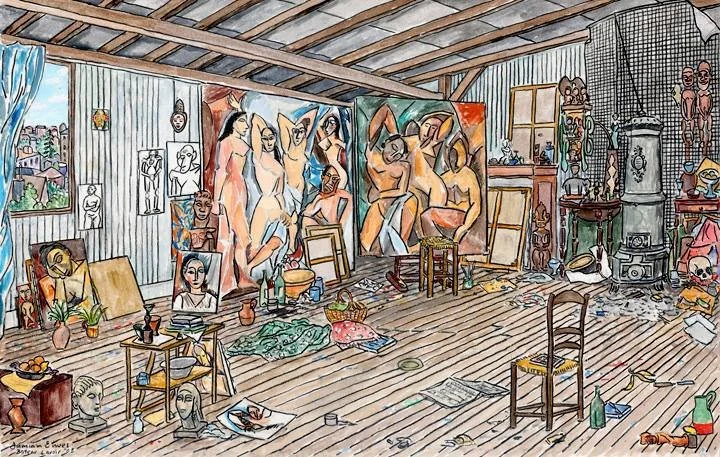
PICASSO’S STUDIO AT THE BATEAU LAVOIR, charcoal + watercolor on paper, 12 x 18 in
ABOUT DAMIAN ELWES
Damian Elwes is fascinated by where creativity comes from—how it takes shape, sparks progress, and impacts our lives. Using the artist's studio as his central subject, he paints these spaces at pivotal moments: when their inhabitants are breaking with convention and, in doing so, reshaping the world around them.
Elwes's studio paintings have developed a reputation of their own. This year he held a solo exhibition at the Fubon Museum in Taipei, and in 2025 The Wall Street Journal spotlighted his paintings at Art Basel Miami.
Rather than working in words, Elwes tells stories through images. His richly detailed studio paintings allow a fresh understanding of the artworks created within them. To figure out the process of a particular artist usually involves years of research followed by visits to the actual workplaces to see the light, the architectural details and the surroundings.
Elwes never attended art school. Instead, he spent two years wandering Paris in search of artist studios where he could learn to paint. An artist would let him sit silently in a corner and make a painting of their studio. At the end of the day that artist would give Elwes the address or telephone number for the next studio to visit. In Paris Elwes learned to tell stories in his paintings and he became infatuated by the subject of the artist studio. Since then he has painted hundreds of them and artists such as David Hockney, Alex Katz and Rose Wylie have invited him to their studios.
Foundations dedicated to artists like Keith Haring and Helen Frankenthaler have helped Elwes track down former studios and provided key research. Sydney Picasso helped Elwes to locate some of Picasso’s studios in Paris. Moreover, she personally stepped in to prevent a gallery from breaking apart Elwes’s “Picasso’s Villa in Cannes,” an immersive, large-scale recreation of Pablo Picasso’s legendary Villa La Californie. When Le Musée en Herbe invited Elwes to show that diorama in Paris in 2018, Sydney attended as guest of honor, and the exhibition drew more than 100,000 visitors. Several Paris institutions, including the Musée Picasso, loaned artworks to the show.
Elwes often uncovers studios that history has forgotten. One young woman in Paris had no idea that Picasso and Braques had invented Cubism in her sitting room at Blvd. Clichy. At the Matisse Museum in Nice, Elwes informed the director that he had located and painted Matisse's Fauvist studio in Collioure—unknown to anyone since Matisse and Derain painted there in 1905. In New York City, he told a student that his small apartment was once the studio where Roy Lichtenstein created most of his 1960s Pop Art. When a studio no longer exists—like Picasso's Bateau Lavoir space, lost to fire in 1908, or Kusama's 1960s New York studio, since replaced by newer construction—Elwes reconstructs that studio from fragments of evidence.
There's a density of ideas in Elwes's work, each painting rewarding close attention. He moves fluidly between eras, often pulling viewers into the distant past—yet, as critic Jerry Saltz has observed, “it is Contemporary because no one else has done this before.”
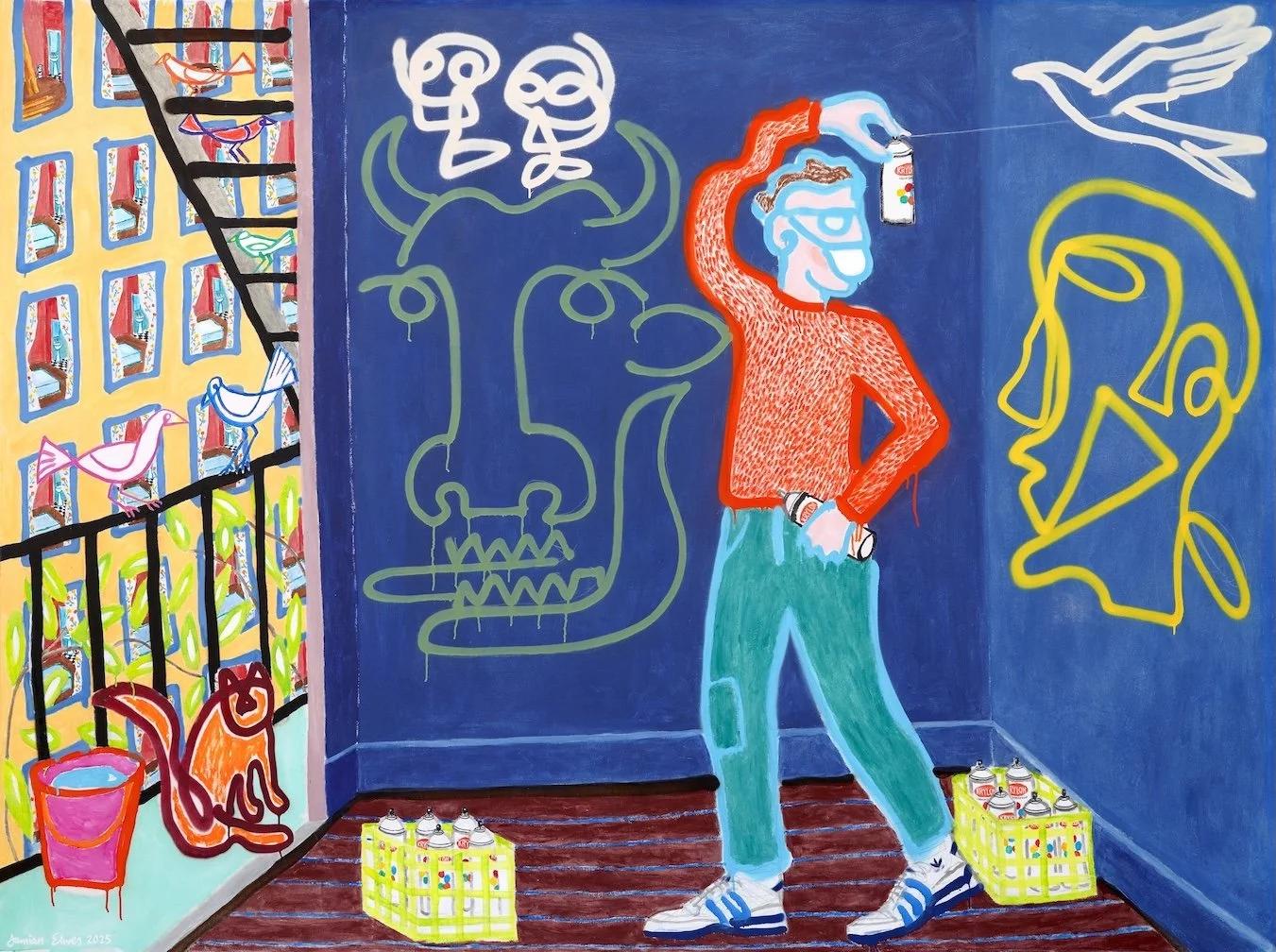
SELF PORTRAIT IN MY GRAFFITI STUDIO IN 1983, spray paint and acrylic on canvas, 74.5 x 100 in/ 189 x 254 cm
“I can tell you are going to be a very good painter by your use of the color yellow. It is the most difficult color to use and I don’t use it much. Van Gogh used a lot of yellow.”
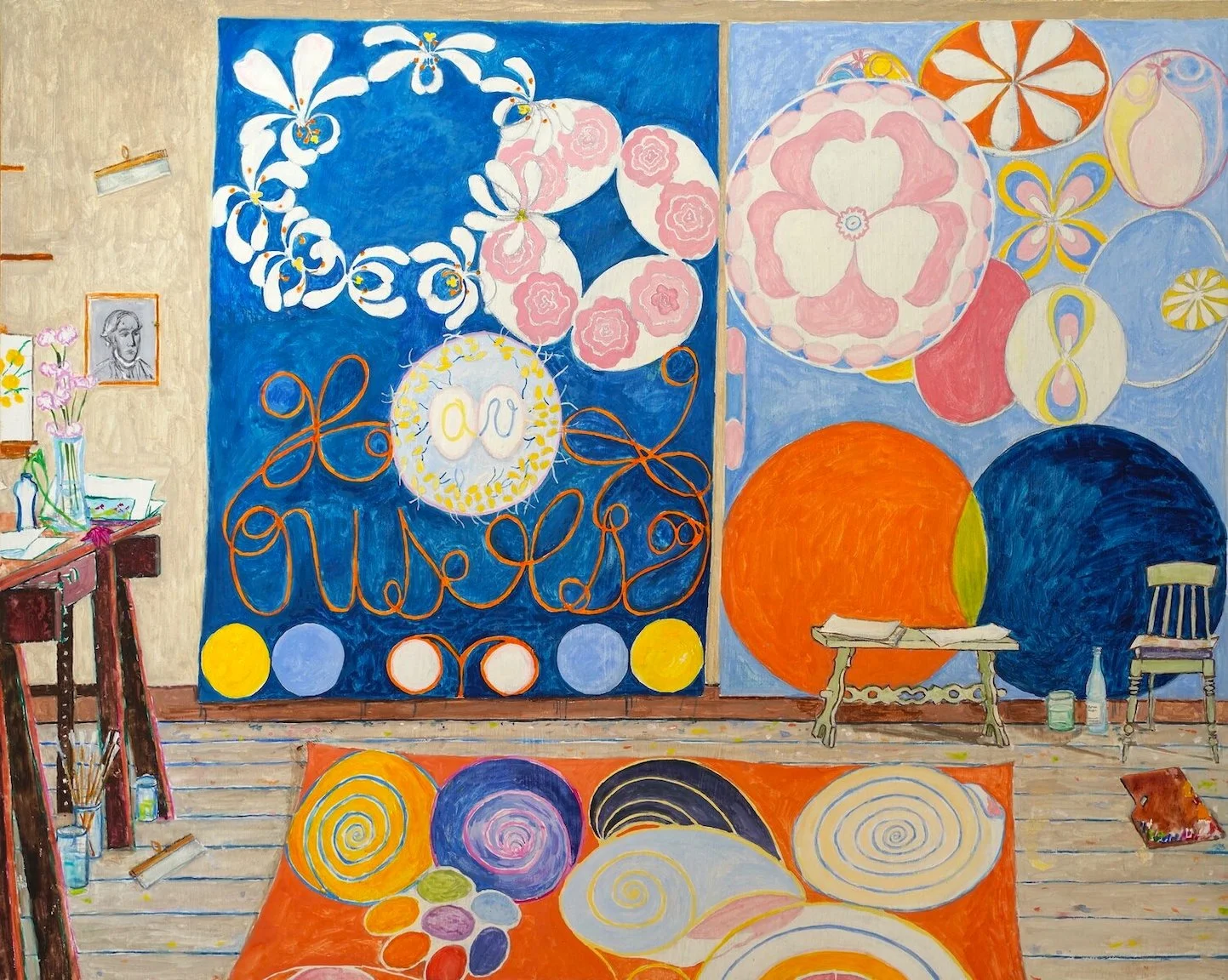
HILMA AF KLINT’S STUDIO (STOCKHOLM, 1907) 2020, Gouache on board, 20 x 25in/52 x 65 cm
“Elwes paintings are a mystical, magical tour of rarely seen wonderlands.”
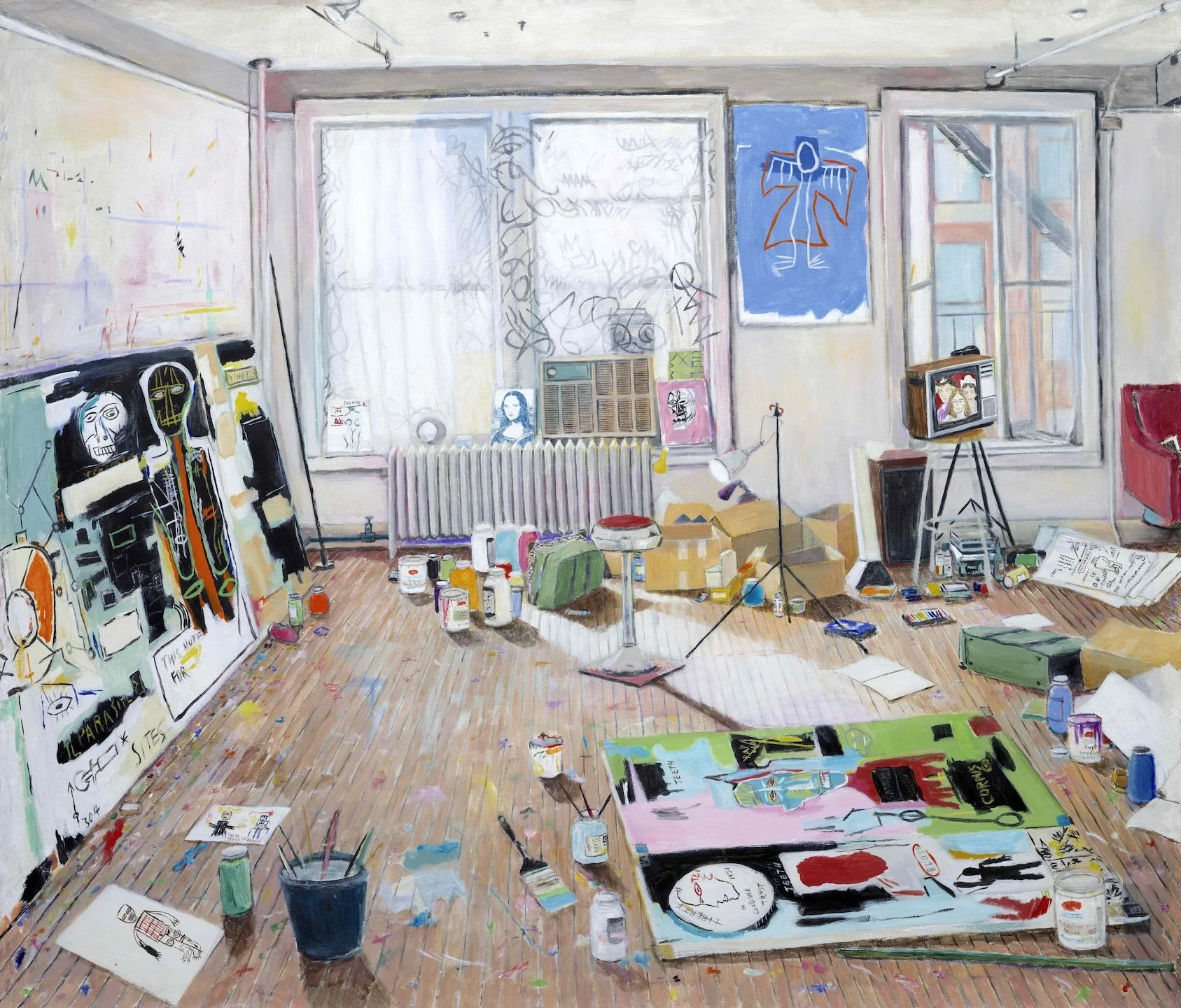
BASQUIAT’S STUDIO 1, oil crayon + acrylic on canvas, 66 x 72in/168 x 259 cm, 2017
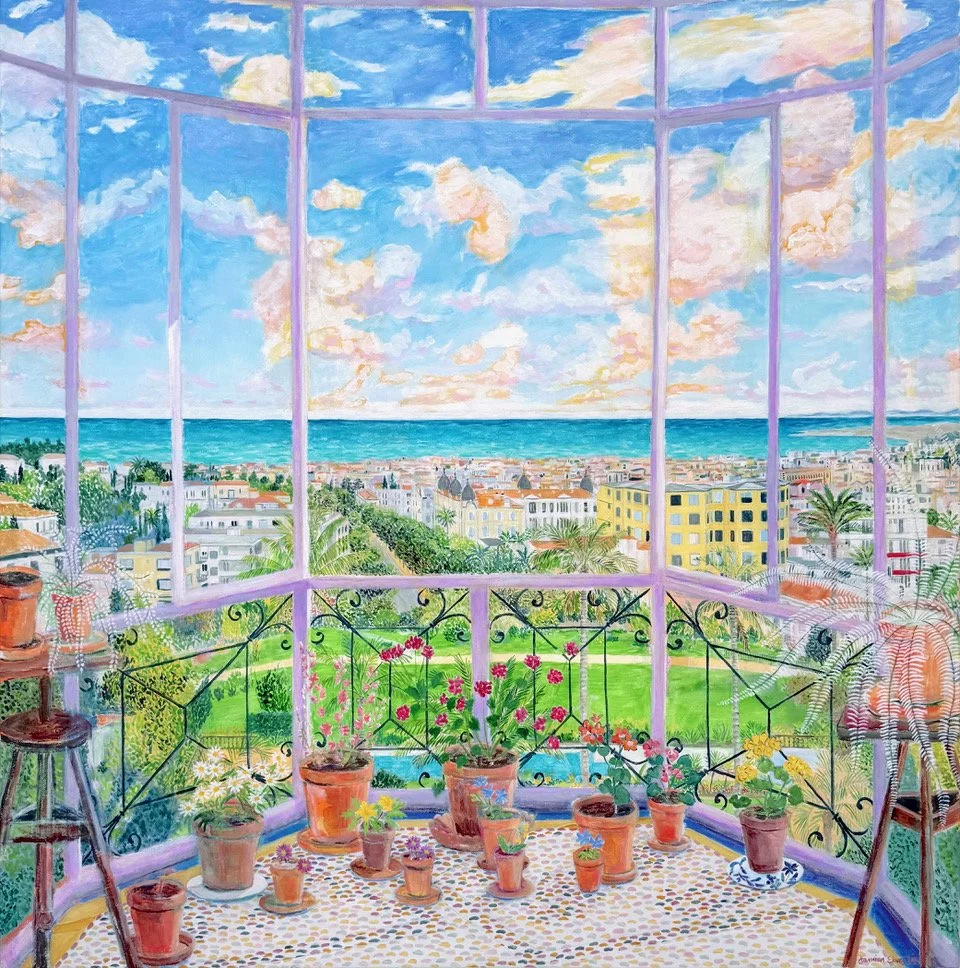
MATISSE’S BALCONY (LA REGINA/NICE, 1960) 3, 66 x 66in/168 x 168cm, 2015
“Elwes spends weeks, even months researching the exact physical details of a scene he is concerned with.”
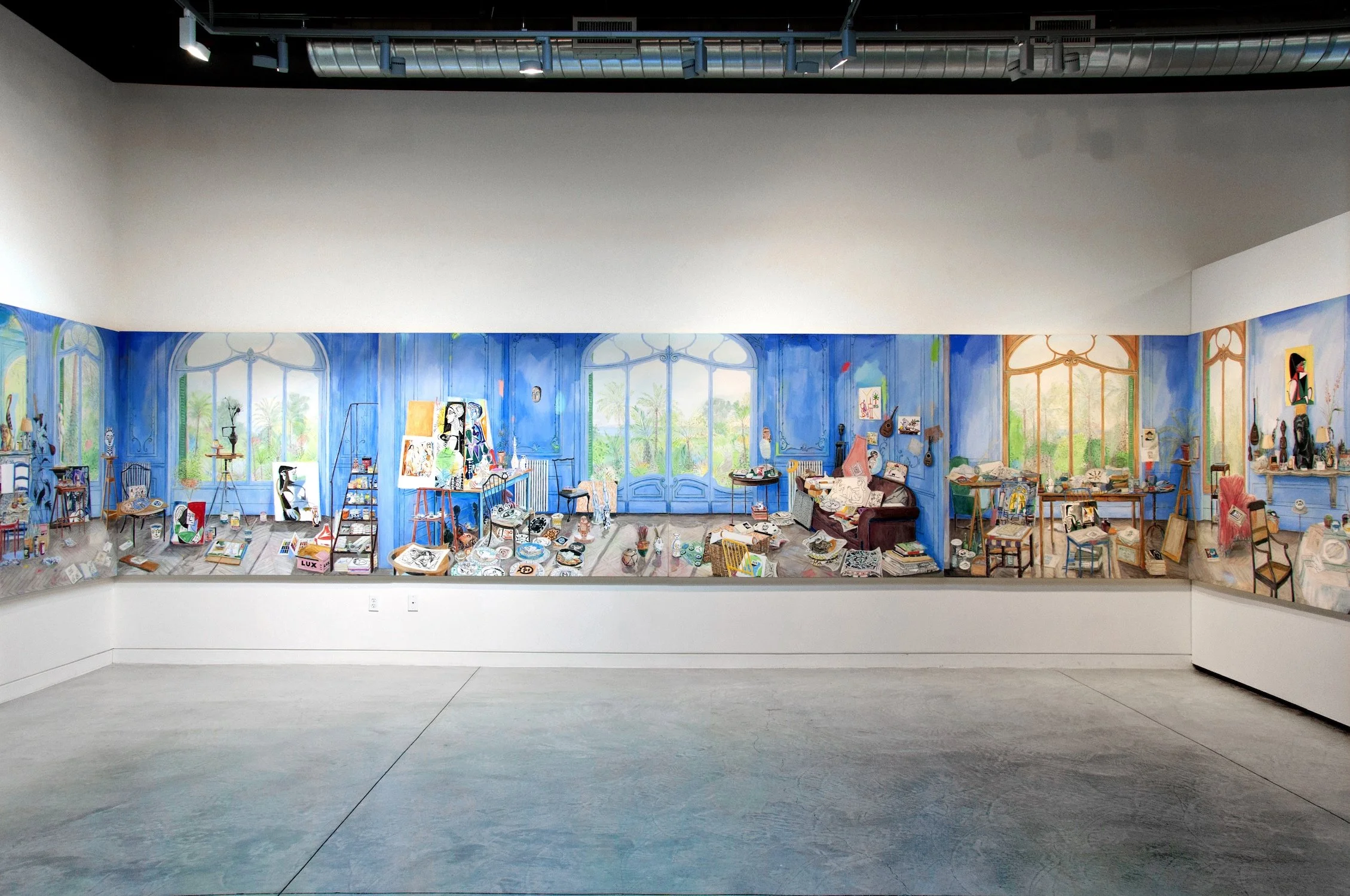
PICASSO”S VILLA LA CALIFORNIE IN CANNES, 2005-18 (CLICK IMAGE TO SEE VIDEO OF THIS PAINTING) (CLICK IMAGE TO SEE VIDEO OF THIS PAINTING)