PICASSO’S VILLA IN CANNES
“You can tell as much about an artist by the way they place their things as you can from seeing their paintings”
ABOUT
For more than three decades, Damian Elwes has created a distinctive body of work, reconstructing the spaces of the world’s most influential artists as portals into moments of invention.
Elwes’ premise is simple but urgent: creativity is humanity's most valuable asset, and the artist studio is a place where that can be witnessed. Elwes chooses the moment an artist was at their most imaginative, then reverse-engineers the room around that spark. He describes the conditions that produced innovative artworks — the light, the clutter, the unfinished canvases, the objects an artist kept close.
Elwes' method — equal parts art historian, detective, and painter — has no real precedent, which is exactly what critic Jerry Saltz meant when he called the work “Contemporary because no one else has done this before." It's a practice built on relentless curiosity, extensive research, pilgrimages to the studios to study the architecture and the light, and relationships with the artists, their Foundations, families or friends.
That appetite for direct access goes back to the beginning. After college Elwes spent two years walking the streets of Paris, knocking on the doors of working artists and asking to make a painting of their studios. That was his art school — a crash course in technique, medium, and nerve that shaped his voice more than any classroom could have. Along the way, Elwes made his first large canvases at the urging of Keith Haring. Six months later his early graffiti works were exhibited by London dealer, Robert Fraser, in tandem with a show by Jean-Michel Basquiat.
That same tenacity carried through to one of Elwes’ most ambitious projects: "Picasso's Villa in Cannes," an immersive, large-scale recreation of Villa La Californie in its 1950s heyday. Sydney Picasso personally stepped in to keep the installation intact, convinced museums would eventually want to show it — and she was right. When Le Musée en Herbe brought the work to Paris in 2018, it drew over 100,000 visitors and pulled loans from institutions including the Musée Picasso, with Sydney Picasso attending as guest of honor.
Today, from his Santa Monica studio, Elwes continues to travel the world, documenting figures such as Rose Wylie, Damien Hirst or Alex Katz, while also reconstructing the studios of history’s masters like his friend and mentor, the late David Hockney. Damian’s solo exhibition this year at the Fubon Museum in Taipei revealed a practice still evolving — rich in ideas, abundant in detail, and unmistakably, energetically his own.
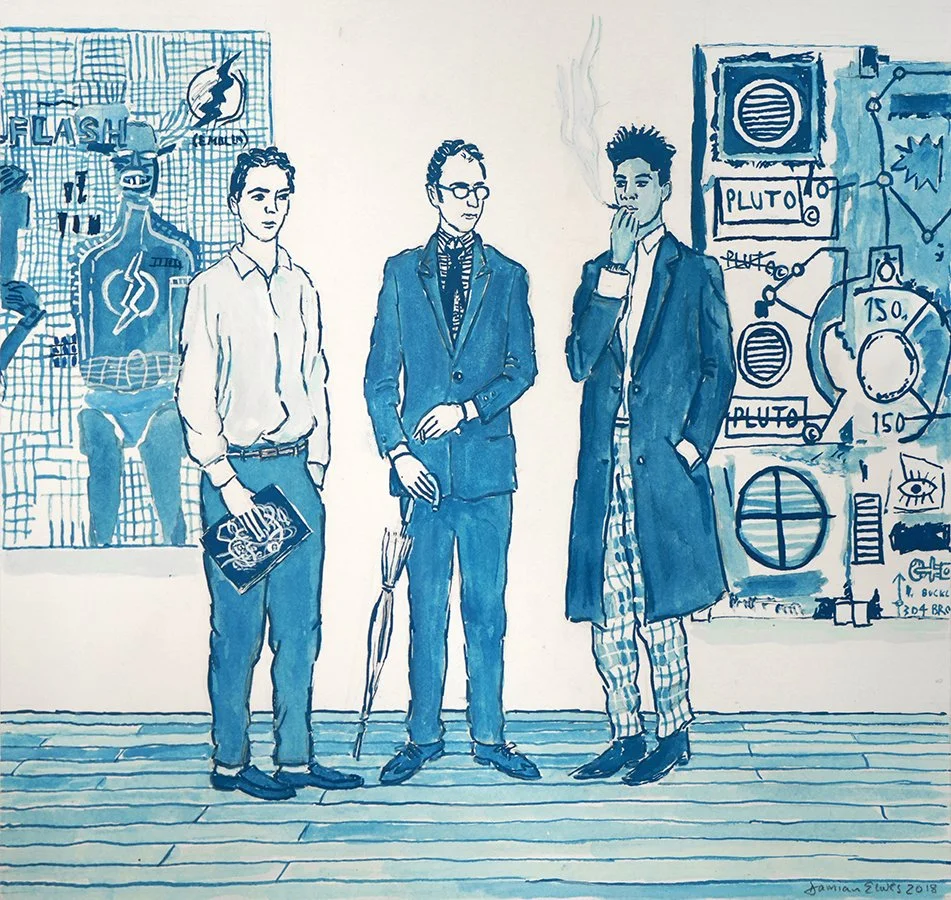
DAMIAN ELWES AND JEAN MICHEL BASQUIAT WITH THEIR ART DEALER ROBERT FRASER IN 1984
“Your work is in that realm of half real half dream.”
REPRESENTED BY: UNIT LONDON PEARL LAM GALLERY, HONG KONG MODERNISM SAN FRANCISCO
“You are goooooood...
Great work now.”
CV
SELECTED SOLO EXHIBITIONS:
2026 “Resonance: Symphony of Light, Love and Color” Fubon Art Museum 2024 “Studio Visit” Unit London 2020 “The Room Where It Happened” Unit London 2019 “Artist Studios: From Klimt to Kusama” Modernism, San Francisco 2018 “Secrets of the Studio, Monet to Wei Wei” Museé en Herbe, Paris 2016 “Artist Studios from Giacometti to Kapoor” Serena Morton, London 2016 “Artist Studios from Picasso to Jeff Koons” Modernism, San Francisco 2008 “Creative Spaces: The Studios of Dali, Kahlo, Picasso, Matisse” Lefevre, London 2007 “Artists’ Studios” Scream, London 2006 “Picasso’s Villa La Californie” curated by Fred Hoffman, M&B Fine Arts, L.A. 2004 “The Studios of Matisse, Picasso, Warhol, and Duchamp” Francis Naumann, NY 1999 “Amazon” Robert Berman, L.A. 1998 “Forest of Statues” + “Fallen Tree” Richard Salmon Gallery, London 1992 “Byron Keats and Shelley in Italy” Earl McGrath Gallery, L.A.
SELECTED GROUP EXHIBITIONS:
2026 Art Basel Hong Kong, Pearl Lam Gallery 2025 Art Basel Miami, Pearl Lam Gallery 2025 Art Basel Hong Kong, Pearl Lam Gallery 2021 “Art and Hope,” USC Fisher Museum, L.A. 2019 “In the Studio, Creation at Work” Musée Eugène-Delacroix/Louvre, Paris 2018 “Independent Vision” Arkansas Arts Center 2015 “Staring Back on Picasso’s Demoiselles d’Avignon” Fleming Museum of Art, VT 2015 “Spark” El Segundo Museum of Art, CA 2010 “The Art of Knowledge” Zimmer Museum of Art, Los Angeles 2007 “The Demoiselles Revisited” Francis Naumann, NYC 1984 “Paris/New York” Robert Fraser at Fruitmarket Gallery, Edinburgh (see image below)
“Elwes paintings are a mystical, magical tour of rarely seen wonderlands.”
ABBREVIATED COLLECTOR’S LIST
MARCIANO ART FOUNDATION FUBON MUSEUM LOUVRE MUSEUM MUSÉE EN HERBE KATRINE BELLINGER COLLECTION HARROW SCHOOL MUSEUM DELACROIX MUSEUM MLT FOUNDATION FLEMING MUSEUM CECIL + MICHAEL PULITZER FOUNDATION MR + MRS STEWART RESNICK CAROL BAYER SAGER + BOB DALY MR + MRS TERRY SEMEL JERRY SALTZ + ROBERTA SMITH MR + MRS FRED HOFFMAN TOBIAS van GILS ANDRE BOISSIER
“The history of painting is contemporary for a contemporary painter.”
“Your impactful, thoughtful and extremely complex and beautiful art brings positivity and delight to boost our happiness in such a troubled and stressful world.”
PRESS
VOGUE PORTUGUAL APRIL 2024 10 PAINTINGS FEATURED

CLICK THIS LINK TO READ INTERVIEW WITH DAMIAN IN THIS MAGAZINE
WHITE HOT MAGAZINE DECEMBER 2020
"THE BEST ART IN THE WORLD Pictures From a Pandemic: Damian Elwes
By ANTHONY HADEN-GUEST
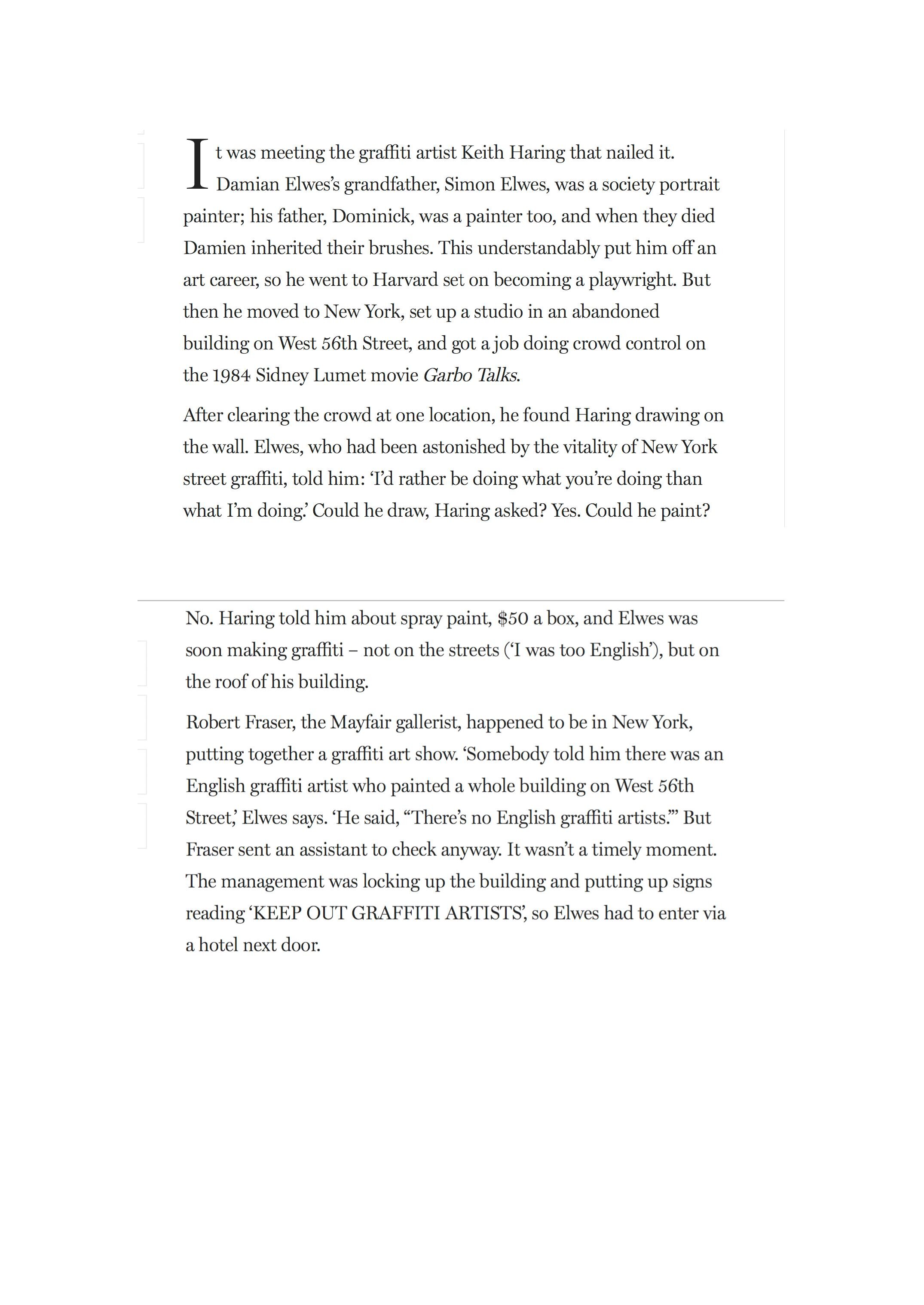
Damian Elwes’ father and grandfather were artists. “They both left me their brushes,” he says. But Elwes, a young Brit, went to Harvard, resolved to write plays. Graffiti was the game-changer. “The paintings on the walls of New York City were alive and metamorphosing every day,” he says. “This was 1984.”
After Harvard, the director, Sidney Lumet, hired him to work on a movie. “My job was crowd control,” Elwes says. One shoot was in Penn Station “I cleared everybody out. And there was Keith Haring, working on black posters with white chalk. I told him that what he was doing looked a lot more interesting than what I was doing.” He and Haring talked graffiti. “He was very approachable and magnanimous,” Elwes says. But Haring insisted that Elwes make a painting before they spoke again.
Elwes soon got another assignment. Lumet’s town house was to be replaced by a skyscraper, so he was out of the place and wanted Elwes to make sure his belongings were safely out too. Done deal. “Next day I realized I had the keys to a double brownstone on West 56th Street,” he says. “I’m so lucky! This is where I can do a painting. As a Brit I was too uncomfortable to go out on the street and paint graffiti, so I painted every day in that building.”
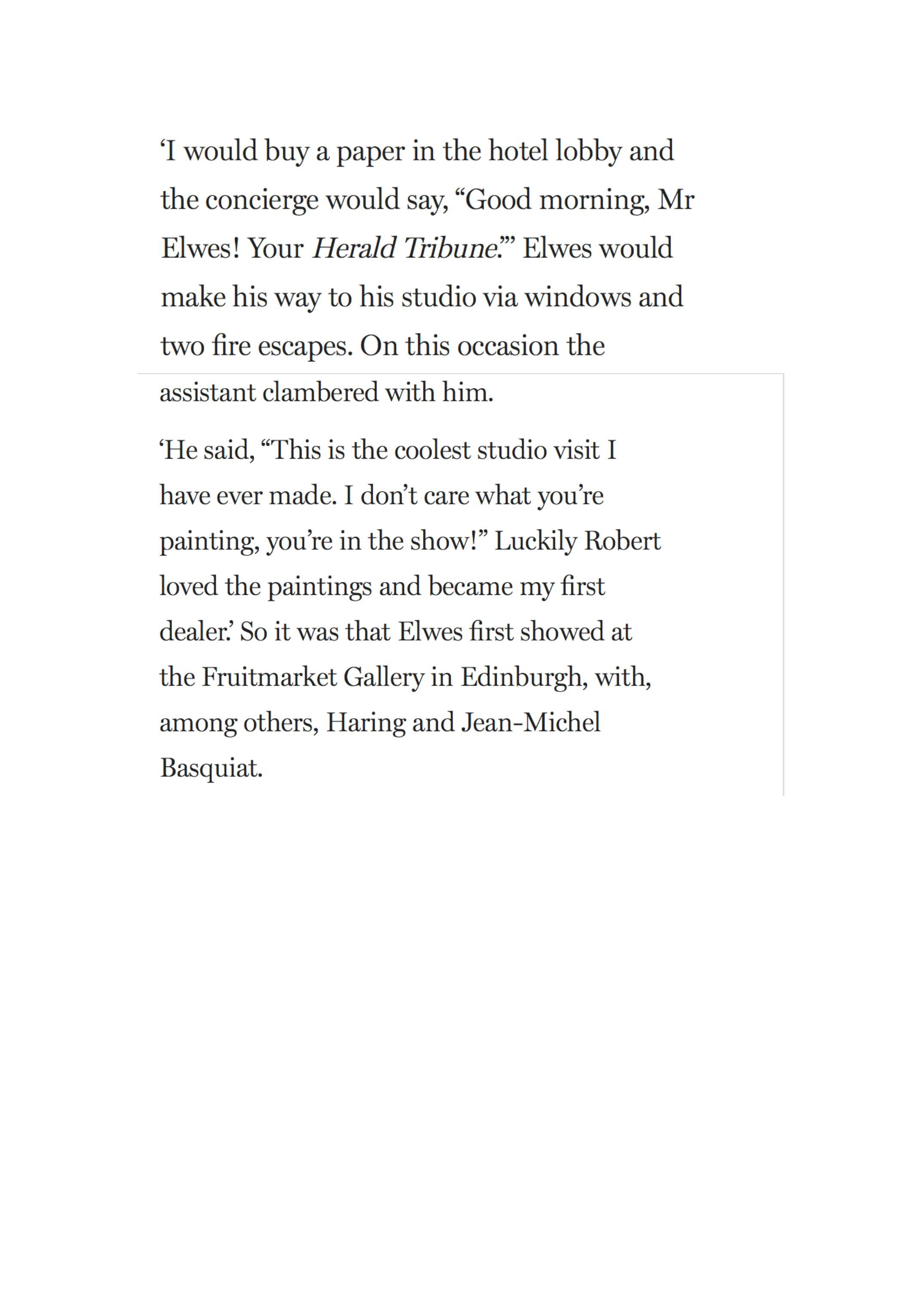
The building was huge, its flat roof was soon covered with Elwes graffiti and highly visible. Word got around and Robert Fraser, a leading London dealer, who was in New York putting together the first UK show about New York graffiti art, was told about this Brit practicioner. The gallerist was skeptical. “There’s no English graffiti artists. There’s no graffiti art in England!”. But he did send his assistant, Gerard Faggionato, to check it out, and he gave the work a thumbs up. “Robert loved my paintings,” Elwes says. A couple of months later Elwes was in the UK for the opening at a major Edinburgh gallery, the Fruitmarket.

Hilma af Klint’s Studio, 2020, Gouache on board, 20.5 x 25.5 in. Courtesy of the artist.
Elwes then went down to London and met Jean-Michel Basquiat, at his retrospective at the ICA, in which Robert Fraser had a hand. Fraser offered Elwes a graffiti art show on Cork Street, but Elwes was already moving on from this. “I want to tell stories. You can’t tell stories with a spray can,” he told Fraser. “I’m going to go to Paris to learn to paint with a brush”.
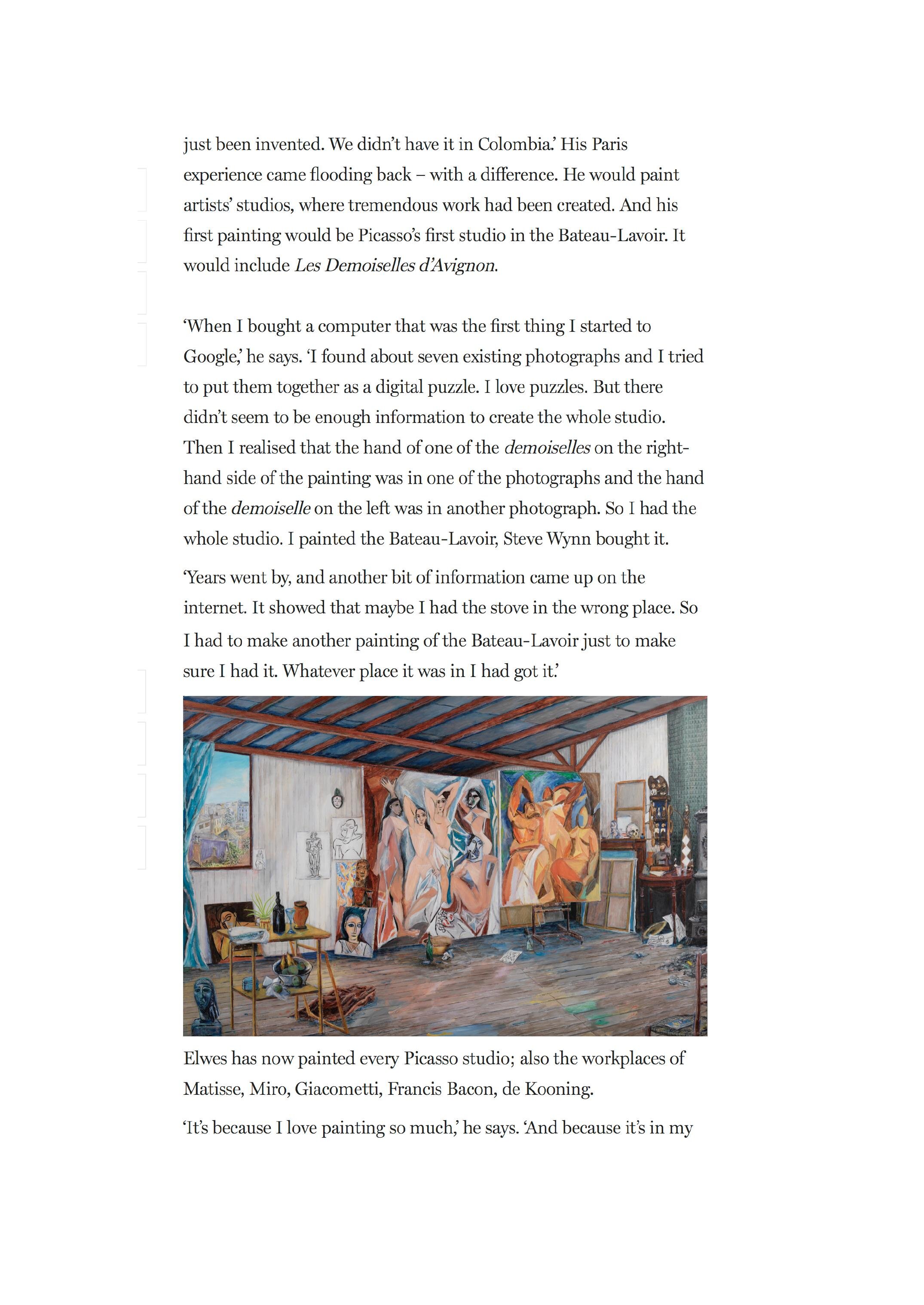
Elwes spoke marginal French but hit the Paris pavement running. “On my first day I went to Picasso’s Bateau Lavoir studio,” he says. “And there was nothing there, it was gone. Next day I went to where Matisse had had a studio on the Quai St Michel. That building is still there, but I couldn’t get in past the concierge.” But at the Pompidou Center he chanced upon Picasso and Matisse paintings of their studios alongside each other. “I sat in front of those paintings for several hours. I was crying because I was realizing at that moment how much I loved painting. I loved line, form and color. I guess I was thinking about my grandfather and father being painters and that I was now painting. It was not something that I had really wanted to do. It had just happened.”
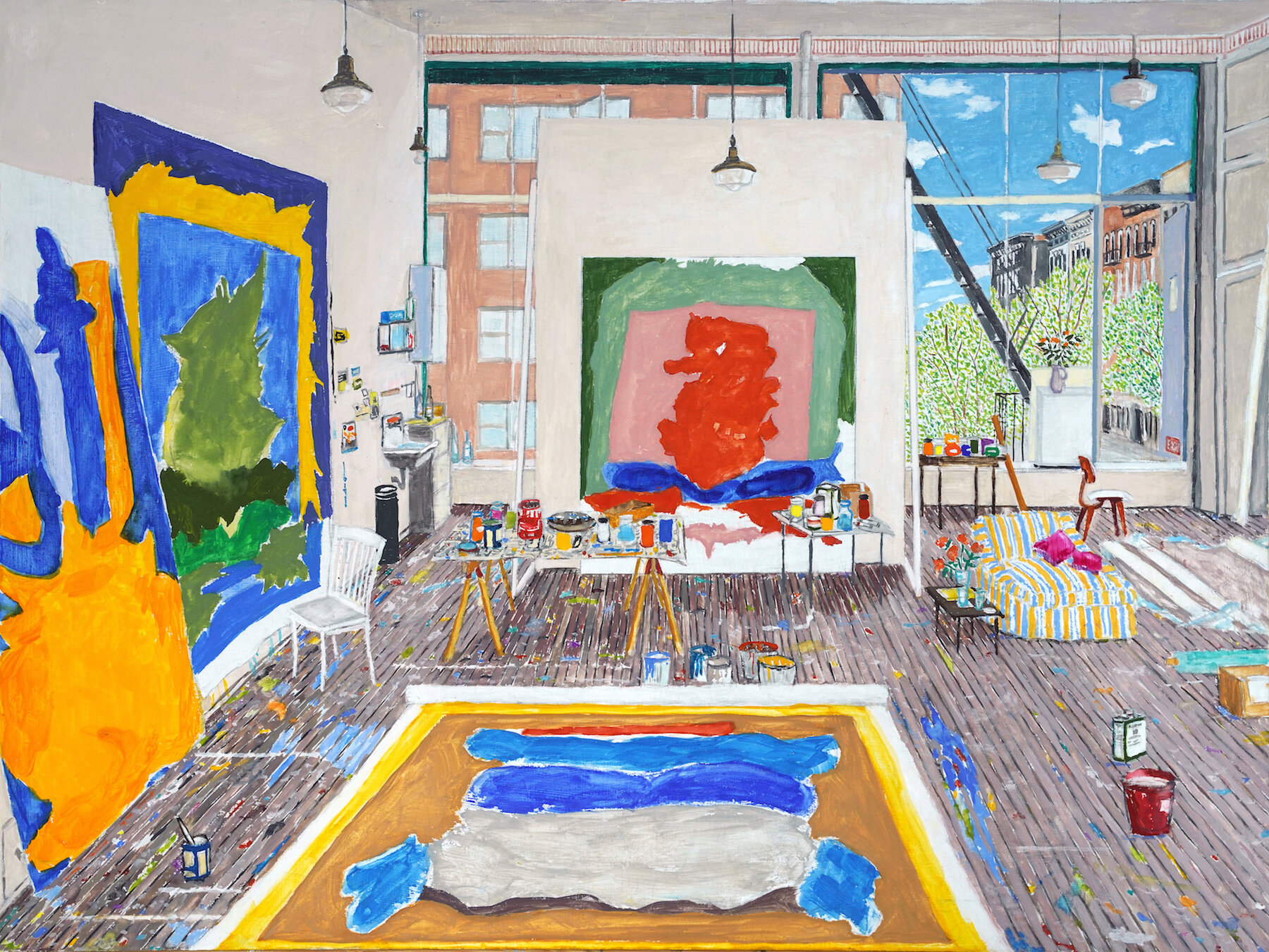
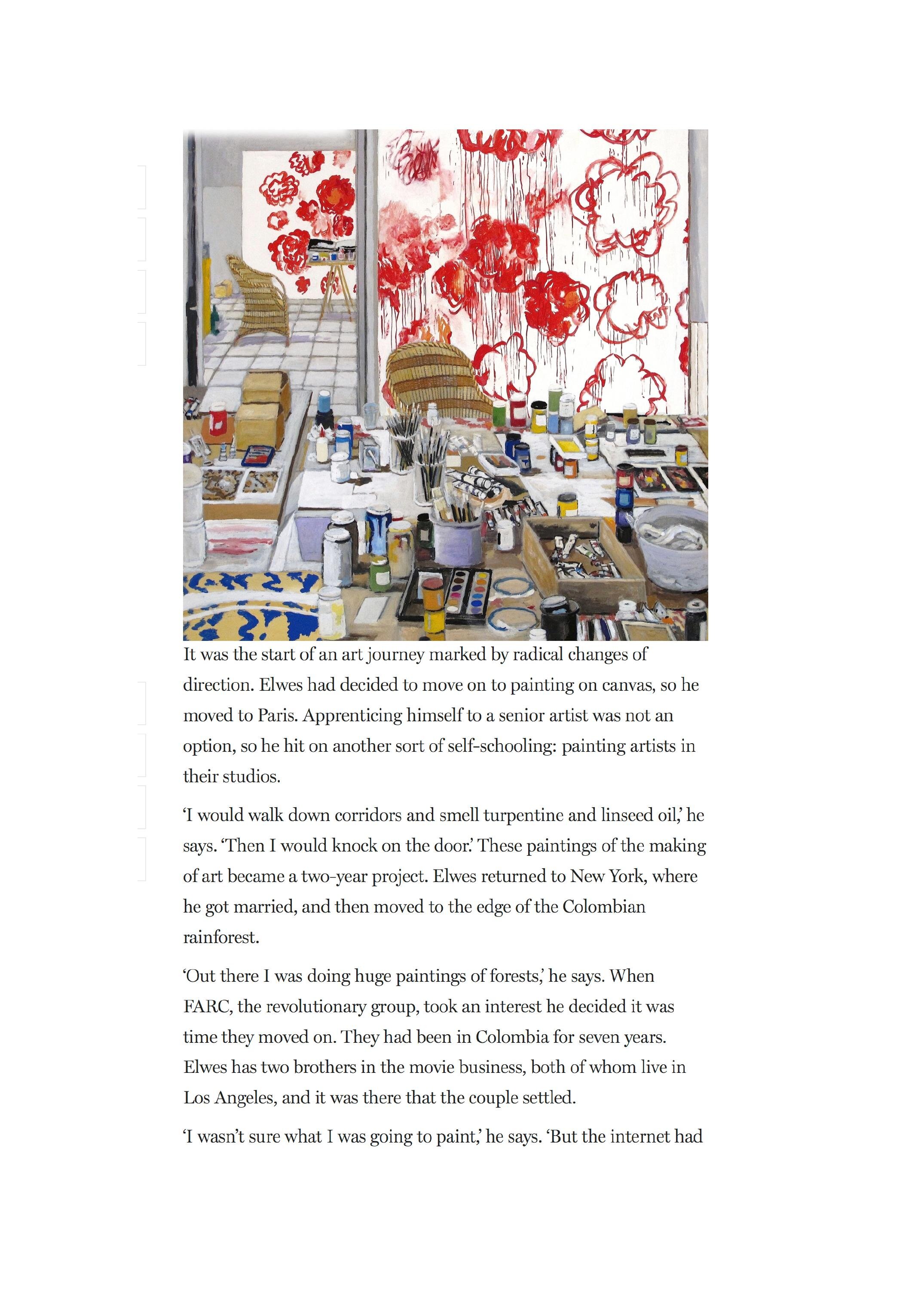
Helen Frankenthaler’s Studio, 2020, Gouache on board, 18.4 x 25 inches. Courtesy of the artist.
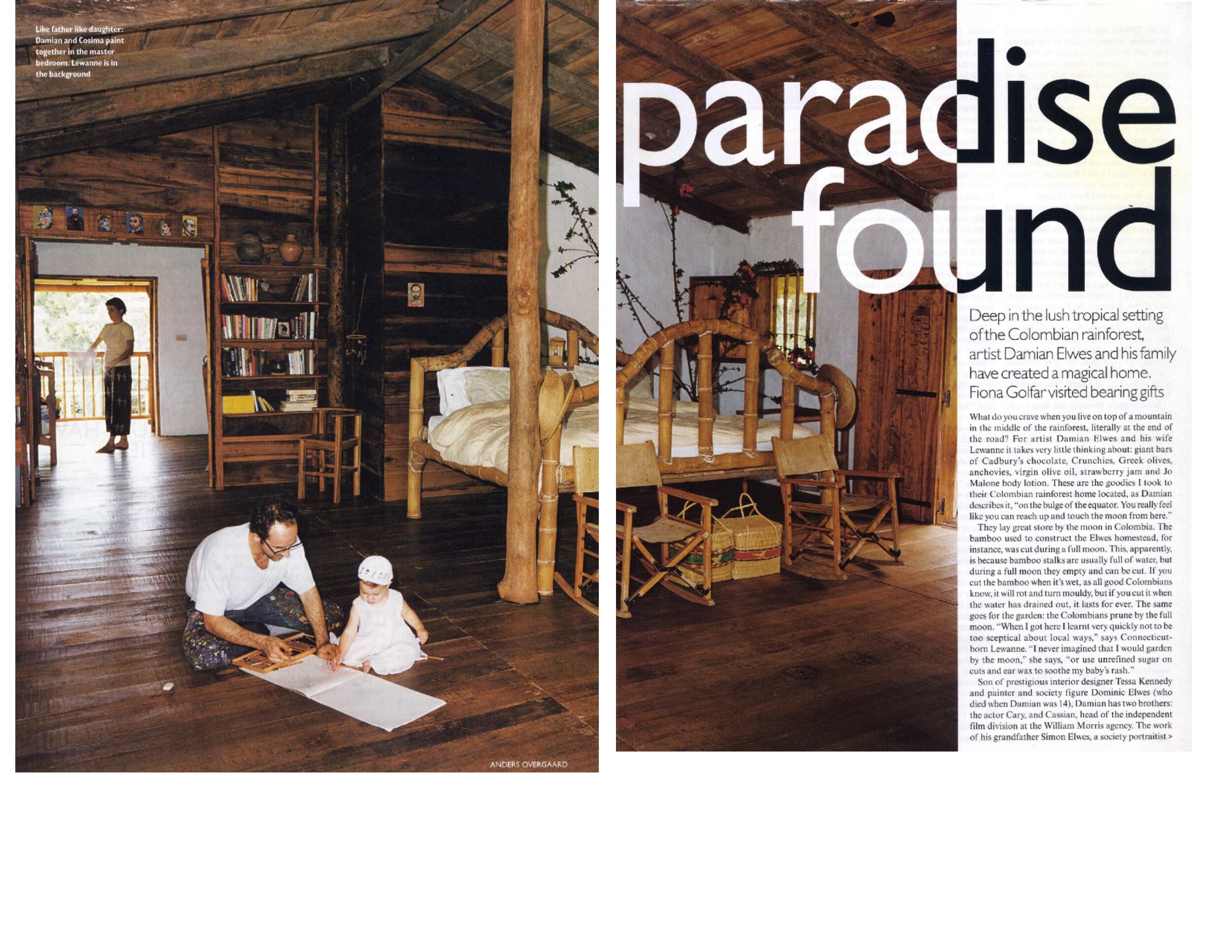
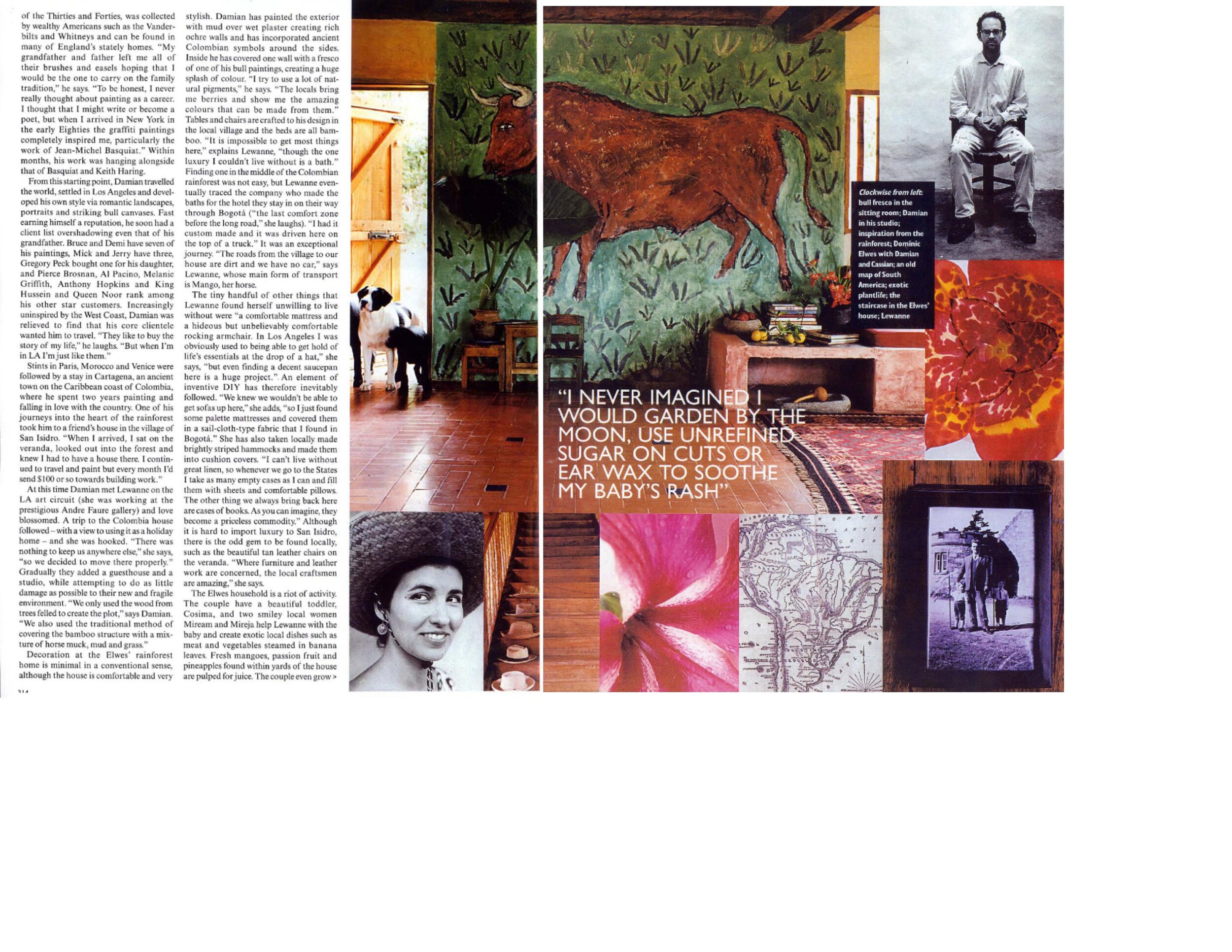
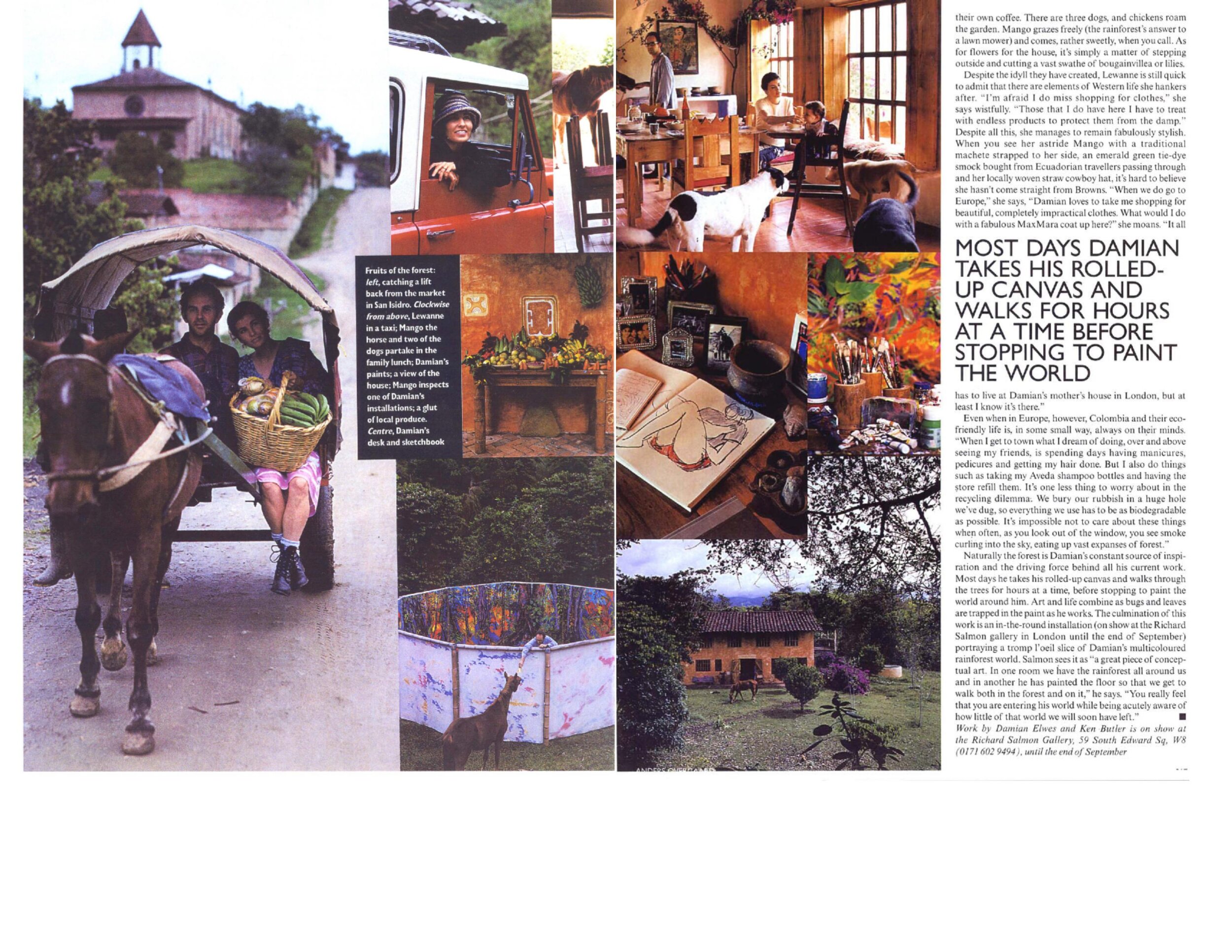
BRITISH VOGUE visits Damian’s Colombian Studio
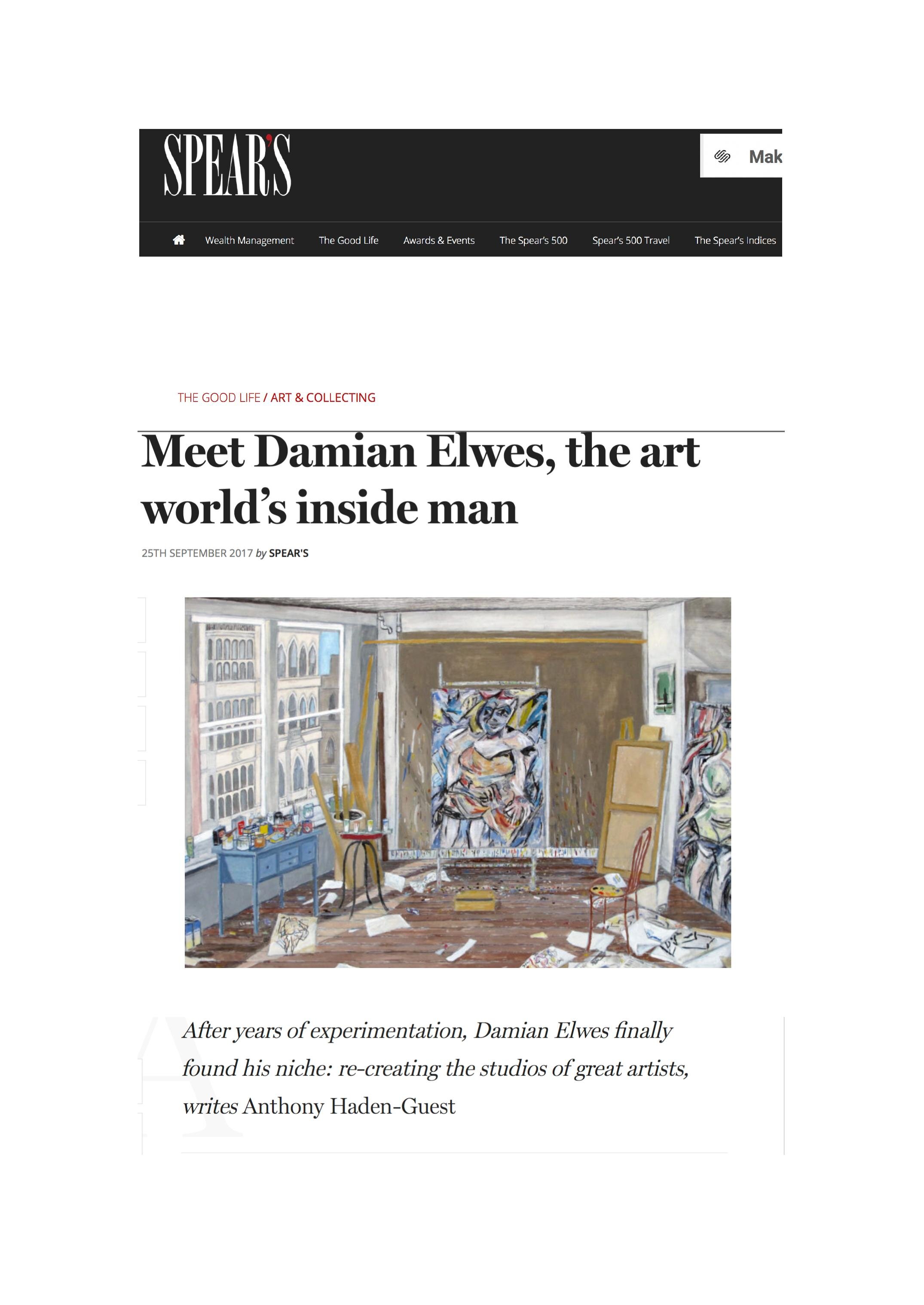
SPEARS MAGAZINE 2017
ELLE MAGAZINE 2018
Paris Museum Show

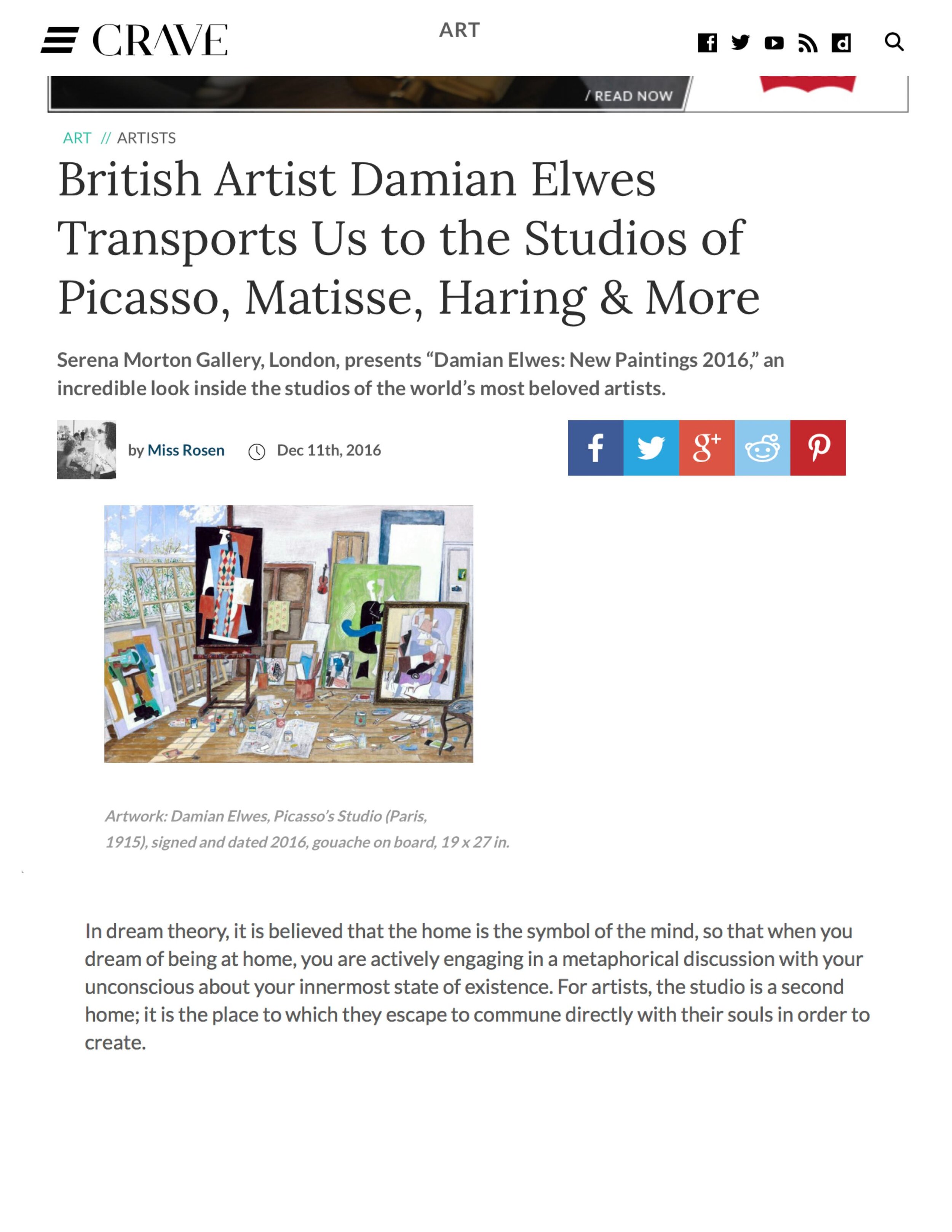
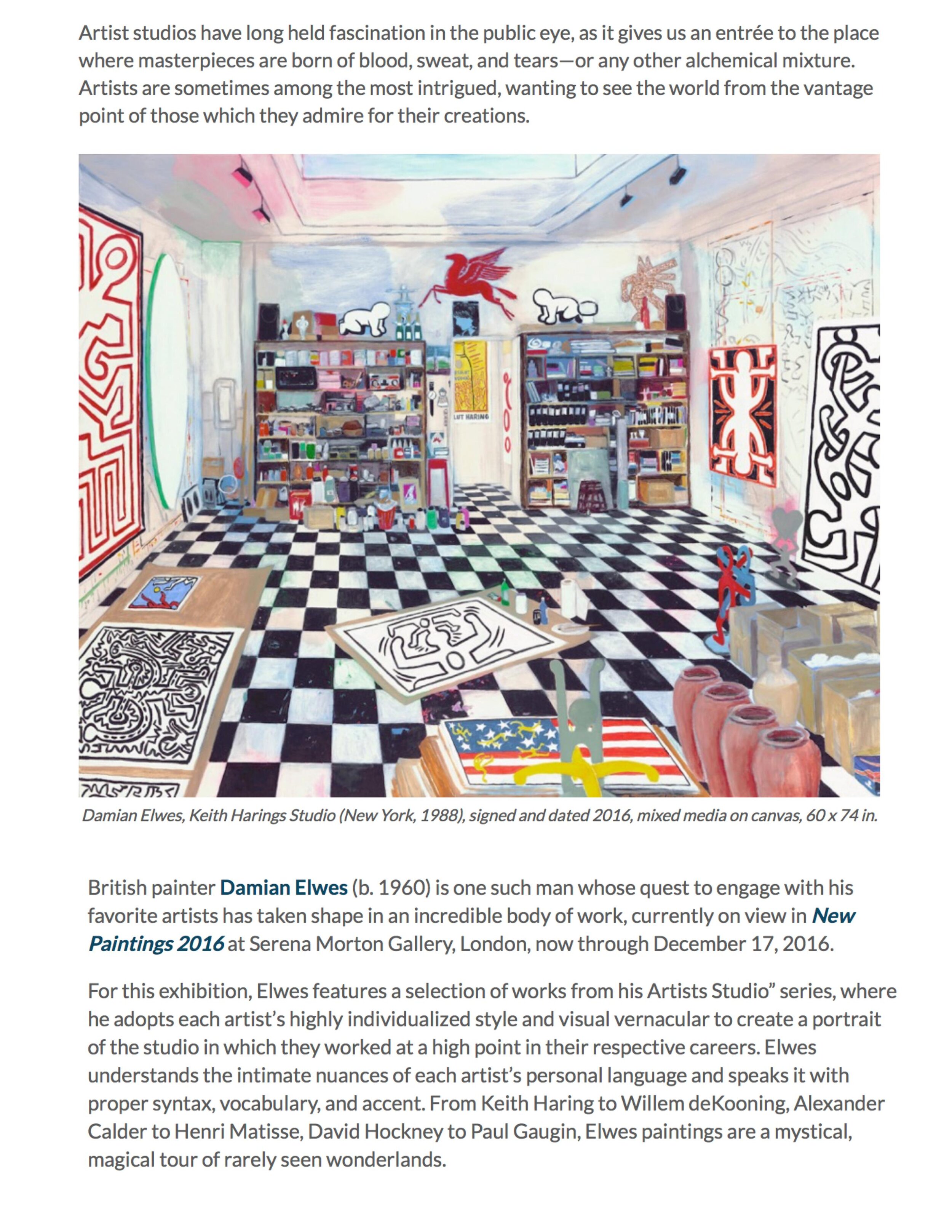
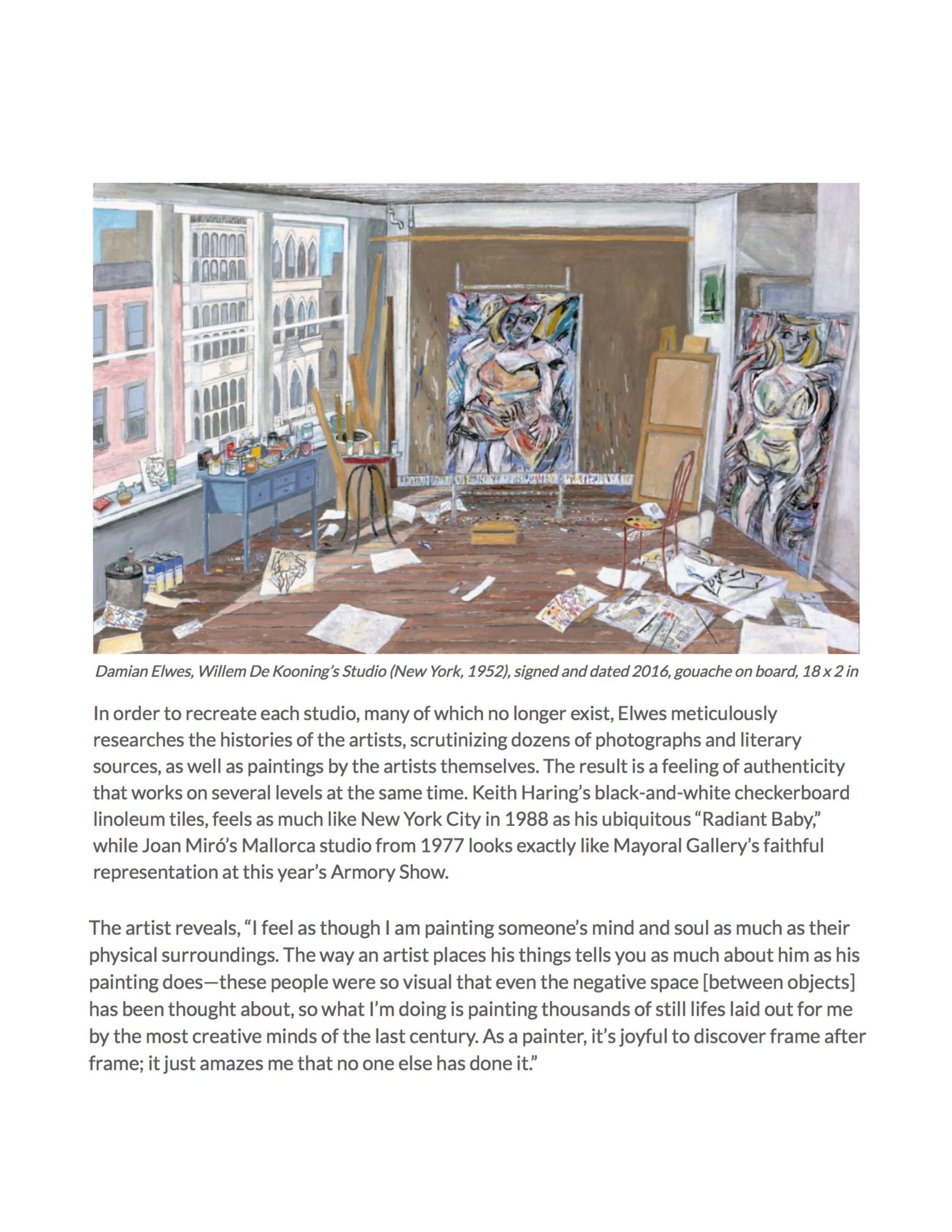
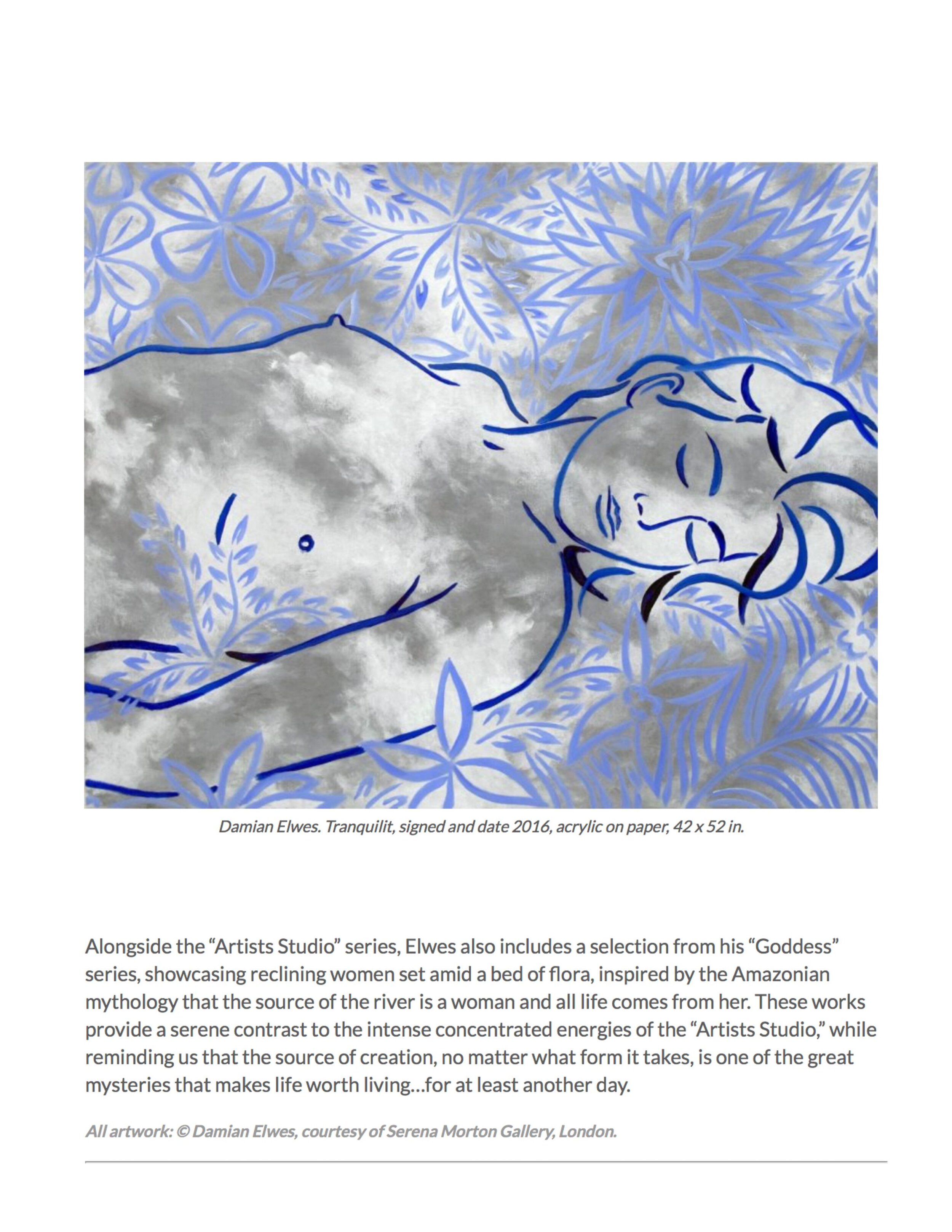
CRAVE 2016 NYC
Art Critic- Miss Rosen
SF WEEKLY 2016
San Francisco Art Critic Jonathan Curiel
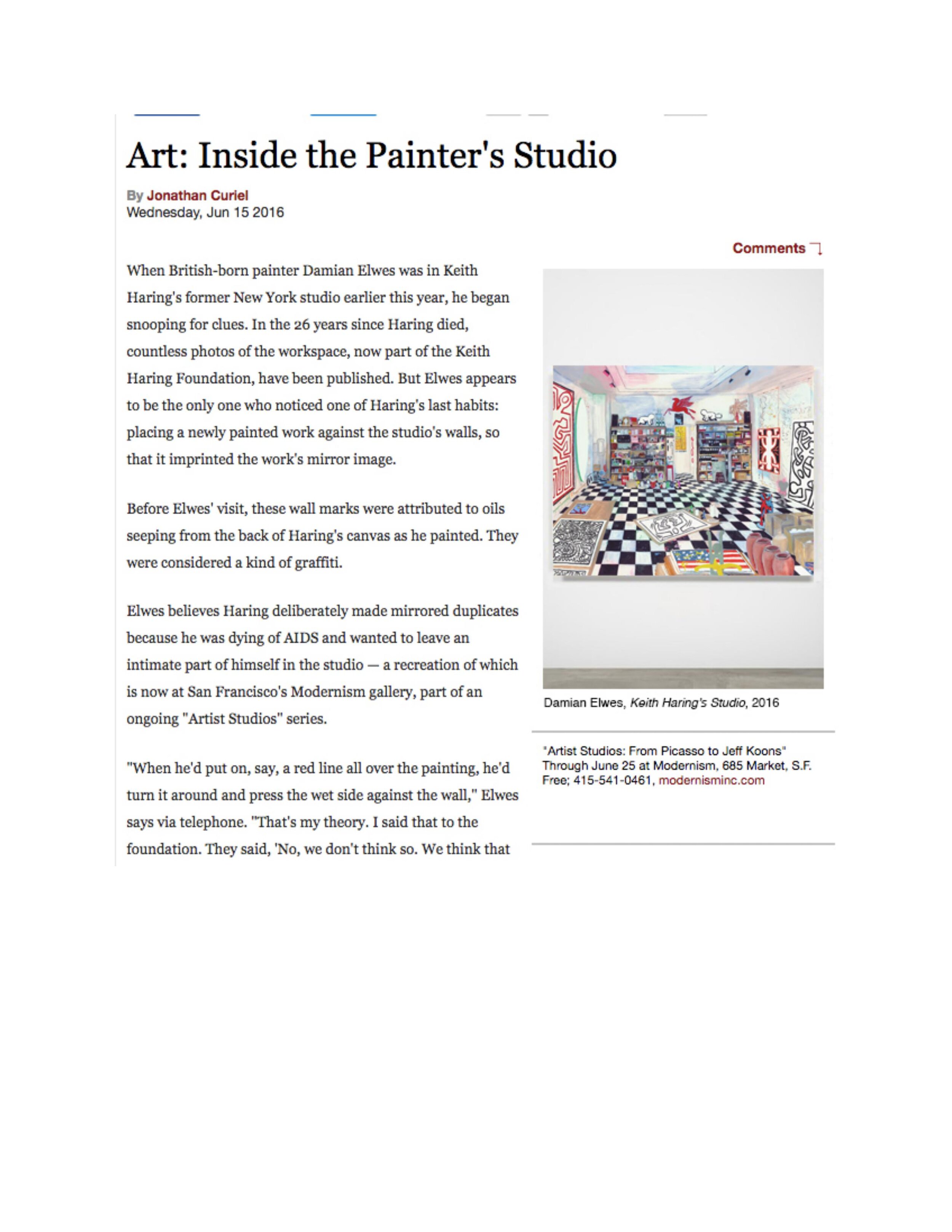
Picasso’s Villa La Californie
Los Angeles Art Historian Fred Hoffman Curator of 2006 Basquiat Retrospective at Brooklyn Museum, MFA Houston + MOCA L.A.
Damian Elwes and the Modernist Heritage
By Fred Hoffman
Central to the Modernist Tradition has been the artist’s concern for the art that has preceded him. One cannot think of Manet without bringing to mind the paintings of Velasquez; one does not think of early Picasso without remembering the work of Cezanne, the Impressionists, and the Symbolists; and one cannot fully digest Roy Lichtenstein without considering his reflections on Monet, Kirchner, Marc, Picasso and the Surrealists.
Damian Elwes has taken this fundamental tenet of modernist practice even further. In focusing on the pictorial re-creation of different Modern painter’s studios, at specific, historically important moments, he has found the means to create a meaningful set of subjects for his own practice as a painter.
While we, the viewer are immediately intrigued and invited to partake of these historical moments, what actually sustains, even heightens our interest, is Damian Elwes’ ability to turn documentation and historical record into compelling pictorial visions requiring repeated viewing and constant deciphering. While we sense that the “scene” unfolding before us is digestible as one clearly defined entity, these works result from a laborious build up, with constant revision and reconsideration of each detail, each piece of information contained within. What is especially interesting, even noteworthy, is that Elwes’ paintings are never the result of information contained in one photograph. Quite the contrary, Elwes spends weeks, even months researching the exact physical details of a scene he is concerned with. In so doing, he is constantly discovering new pieces of information—whether it be the precise layout of an artist’s easels, supplies, tables, chairs, etc.; or in many cases the particular paintings the artist would have had in his studio at any given moment in time.
Elwes’ concern for historical accuracy, and his subsequent investigative process enables his fully realized paintings to have a freshness and immediacy which none of the source material contains nor conveys. It is not, therefore, the fact that he has painted Picasso’s studio that makes Elwes’ work of interest. Rather, it is his ability to use the historical source material about Picasso to achieve some immediacy for his own concerns as a painter. In a way, turning to the practice of a previous artist, combined with intensive investigation and evaluation of that artist’s practice at a given moment in time, results in a great deal of artistic freedom for Elwes’ own practice. With this freedom he is able to express, with a great deal of conviction, even passion, his love for the underlying elements of great painting including composition, color and light. Firmly rooted in these fundamental concerns, Elwes is able to tap into the expressive potential for painting. In the end, it is the expressive quality of these works that we feel drawn to.